
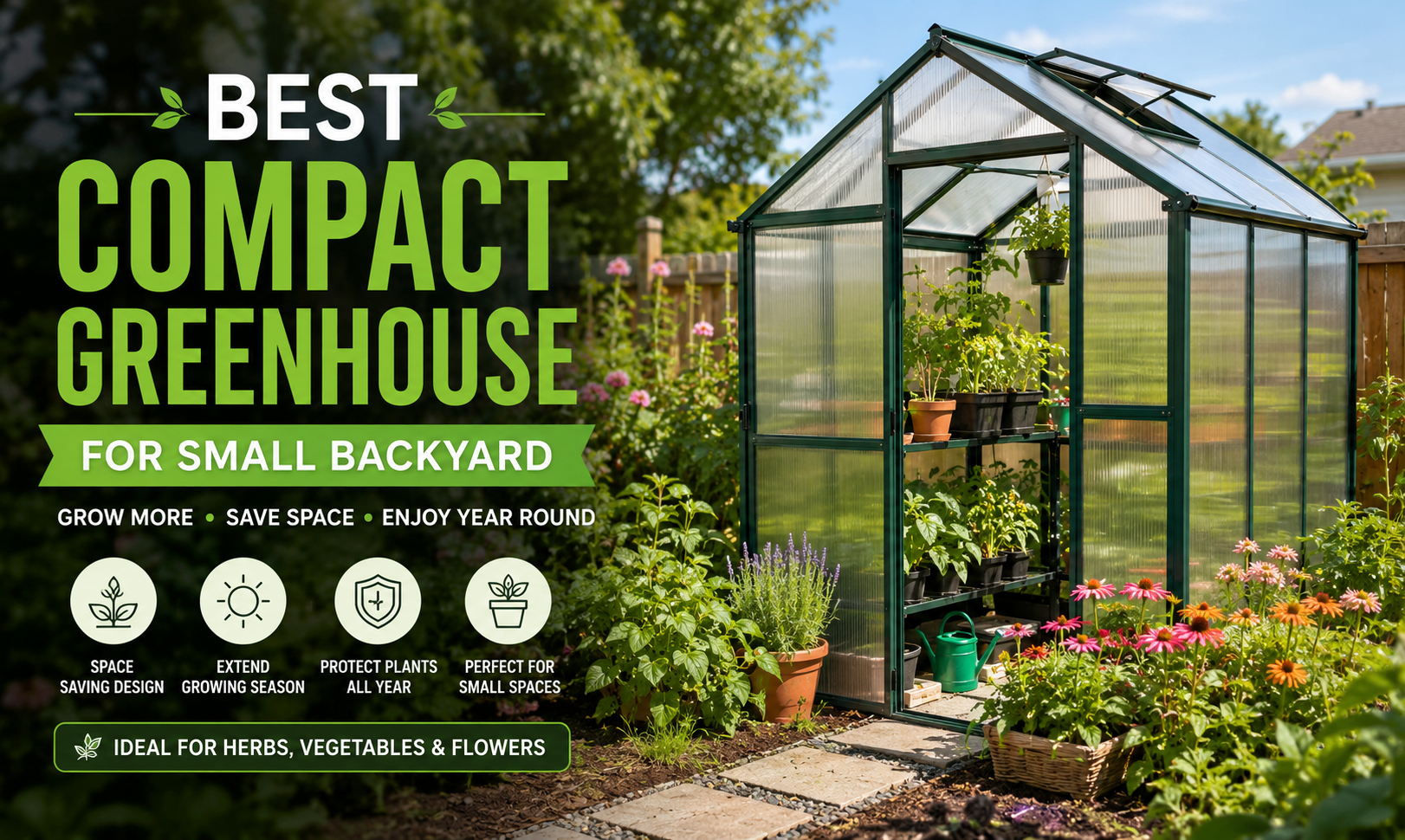
Creating a thriving garden in a limited outdoor space has become one of the biggest gardening trends in 2026. Whether you live in a small suburban home, a townhouse, or an apartment with a tiny yard, a compact greenhouse can help you grow vegetables, herbs, flowers, and plants all year round.
A compact greenhouse is the perfect solution for gardeners who want maximum growing potential without sacrificing valuable outdoor space. These mini greenhouses are affordable, easy to maintain, and ideal for beginners as well as experienced gardeners.
In this guide, we’ll explore everything you need to know about choosing the best compact greenhouse for a small backyard, including features, materials, benefits, setup tips, and maintenance advice.
Why Compact Greenhouses Are Popular in 2026
Gardening has evolved significantly over the last few years. More homeowners are focusing on:
- Sustainable living
- Organic food production
- Backyard gardening
- Space-saving outdoor solutions
As urban homes become smaller, compact gardening solutions are becoming essential.
A compact greenhouse allows homeowners to:
- Extend the growing season
- Protect plants from harsh weather
- Grow plants in limited spaces
- Start seedlings earlier
- Increase gardening success rates
This makes them especially attractive for beginner gardeners and families wanting fresh homegrown produce.
What Is a Compact Greenhouse?
A compact greenhouse is a smaller version of a traditional greenhouse designed specifically for tight outdoor spaces.
These greenhouses typically fit in:
- Small backyards
- Patios
- Balconies
- Deck areas
- Side yards
They provide a controlled environment where plants can grow more efficiently by maintaining:
- Warm temperatures
- Humidity levels
- Sunlight exposure
- Weather protection
Compact greenhouses are available in multiple sizes and styles to suit different gardening needs.
Benefits of Using a Compact Greenhouse
1. Maximizes Small Outdoor Spaces
One of the biggest advantages is space efficiency.
Instead of requiring a large garden area, compact greenhouses utilize vertical and compact layouts to maximize plant growth in small spaces.
Even a tiny backyard can support:
- Herbs
- Tomatoes
- Lettuce
- Cucumbers
- Flowers
with the right greenhouse setup.
2. Extends the Growing Season
A greenhouse creates a warmer environment that allows plants to grow beyond normal seasonal limits.
You can:
- Start seeds earlier in spring
- Continue growing into autumn
- Protect plants during colder months
This means more harvests throughout the year.
3. Protects Plants From Harsh Weather
Outdoor plants are vulnerable to:
- Heavy rain
- Strong winds
- Frost
- Pests
- Sudden temperature changes
A compact greenhouse provides a stable environment that keeps plants healthier and safer.
4. Ideal for Beginner Gardeners
Compact greenhouses simplify gardening for beginners.
The controlled environment improves plant survival rates and reduces common gardening problems.
Many beginner gardeners find it easier to learn:
- Seed starting
- Water management
- Plant care
- Temperature control
inside a greenhouse environment.
Best Types of Compact Greenhouses
Mini Walk-In Greenhouses
Mini walk-in greenhouses provide enough space to stand inside while remaining compact.
Advantages:
- Easy access to plants
- Multiple shelving options
- Better airflow
- Suitable for various plant types
These are ideal for serious hobby gardeners.
Lean-To Greenhouses
Lean-to greenhouses attach to an exterior wall of your home or garage.
Benefits:
- Excellent space-saving design
- Better heat retention
- Easy installation
- Great for narrow backyards
They are particularly popular in urban homes.
Portable Greenhouses
Portable greenhouses are lightweight and easy to move.
Advantages:
- Budget-friendly
- Quick setup
- Seasonal flexibility
- Perfect for renters
These usually feature plastic covers and metal frames.
Wooden Compact Greenhouses
Wooden greenhouses offer a premium appearance and strong durability.
Benefits:
- Attractive natural design
- Strong insulation
- Long-lasting structure
They blend beautifully into modern garden landscapes.
Best Materials for Compact Greenhouses
Polycarbonate Panels
Polycarbonate is one of the most popular greenhouse materials in 2026.
Advantages:
- Excellent insulation
- UV protection
- Durable against impacts
- Lightweight
This material helps maintain stable growing temperatures.
Plastic Covers
Budget-friendly greenhouses often use heavy-duty polyethylene covers.
Benefits:
- Affordable
- Lightweight
- Easy to replace
- Suitable for beginners
However, they may not last as long as rigid panels.
Glass Panels
Glass greenhouses provide a classic premium look.
Advantages:
- Maximum sunlight transmission
- Elegant appearance
- Long lifespan
Disadvantages:
- Higher cost
- Heavier structure
- More fragile
Important Features to Look For
Proper Ventilation
Good airflow is essential for healthy plants.
Look for:
- Roof vents
- Adjustable windows
- Mesh ventilation panels
Proper ventilation helps prevent:
- Mold
- Overheating
- Humidity buildup
Sturdy Frame Construction
The frame determines greenhouse durability.
Strong materials include:
- Powder-coated steel
- Aluminum
- Treated wood
A sturdy frame helps withstand:
- Wind
- Rain
- Outdoor exposure
Shelving and Storage
Integrated shelving maximizes vertical growing space.
This allows you to organize:
- Seedlings
- Pots
- Gardening tools
- Small planters
efficiently in limited areas.
Easy Assembly
Many homeowners prefer greenhouses with:
- Simple instructions
- Tool-free assembly
- Modular components
This makes installation much easier for beginners.
Best Plants to Grow in a Compact Greenhouse
Herbs
Compact greenhouses are perfect for:
- Basil
- Mint
- Parsley
- Cilantro
- Thyme
Fresh herbs thrive in warm greenhouse conditions.
Vegetables
Popular greenhouse vegetables include:
- Tomatoes
- Peppers
- Lettuce
- Spinach
- Cucumbers
These crops grow exceptionally well in controlled environments.
Flowers
You can also grow:
- Orchids
- Petunias
- Geraniums
- Marigolds
for colorful garden displays throughout the year.
Tips for Setting Up a Compact Greenhouse
Choose a Sunny Location
Most plants require at least 6 hours of sunlight daily.
Place your greenhouse in:
- South-facing areas
- Open sunny spaces
- Locations protected from strong winds
Use Raised Shelves
Vertical gardening increases growing capacity.
Shelving helps organize plants while maximizing limited space.
Monitor Temperature Regularly
Compact greenhouses can heat up quickly.
Use:
- Thermometers
- Ventilation systems
- Shade covers
to maintain healthy temperatures.
Avoid Overwatering
Greenhouses retain humidity longer than outdoor gardens.
Overwatering can lead to:
- Root rot
- Mold
- Plant disease
Water carefully based on plant needs.
Common Mistakes to Avoid
Buying an Oversized Greenhouse
Many people purchase greenhouses too large for their backyard.
Measure your available space carefully before buying.
Ignoring Ventilation
Poor airflow is one of the biggest greenhouse problems.
Always prioritize ventilation features.
Using Weak Materials
Cheap greenhouse covers may tear quickly.
Investing in durable materials saves money long-term.
Are Compact Greenhouses Worth It?
Absolutely.
Compact greenhouses offer enormous benefits for small backyard gardening.
They help:
- Increase plant growth
- Extend gardening seasons
- Protect crops
- Improve gardening success
while using minimal outdoor space.
For homeowners who enjoy gardening, they are one of the smartest outdoor investments in 2026.
Final Thoughts
A compact greenhouse is the perfect gardening solution for homeowners with limited outdoor space. Whether you want fresh herbs, homegrown vegetables, or beautiful flowers, these small greenhouses provide a practical and efficient growing environment.
When choosing the best compact greenhouse for your small backyard, focus on:
- Durable materials
- Proper ventilation
- Efficient shelving
- Space-saving design
With the right setup, even the smallest backyard can become a productive and beautiful garden oasis.
As outdoor living trends continue to grow in 2026, compact greenhouses are becoming essential tools for sustainable and enjoyable home gardening.